Material Handling Equipment Guide: Types, Uses, Benefits & Industrial Applications


In today’s fast-paced industry, efficient material handling & movement have become essential to reduce transit time and enhance productivity. To execute it, material handling systems have become the backbone of various industries, including manufacturing, warehousing, logistics, pharmaceuticals, automotive, food processing, and construction.

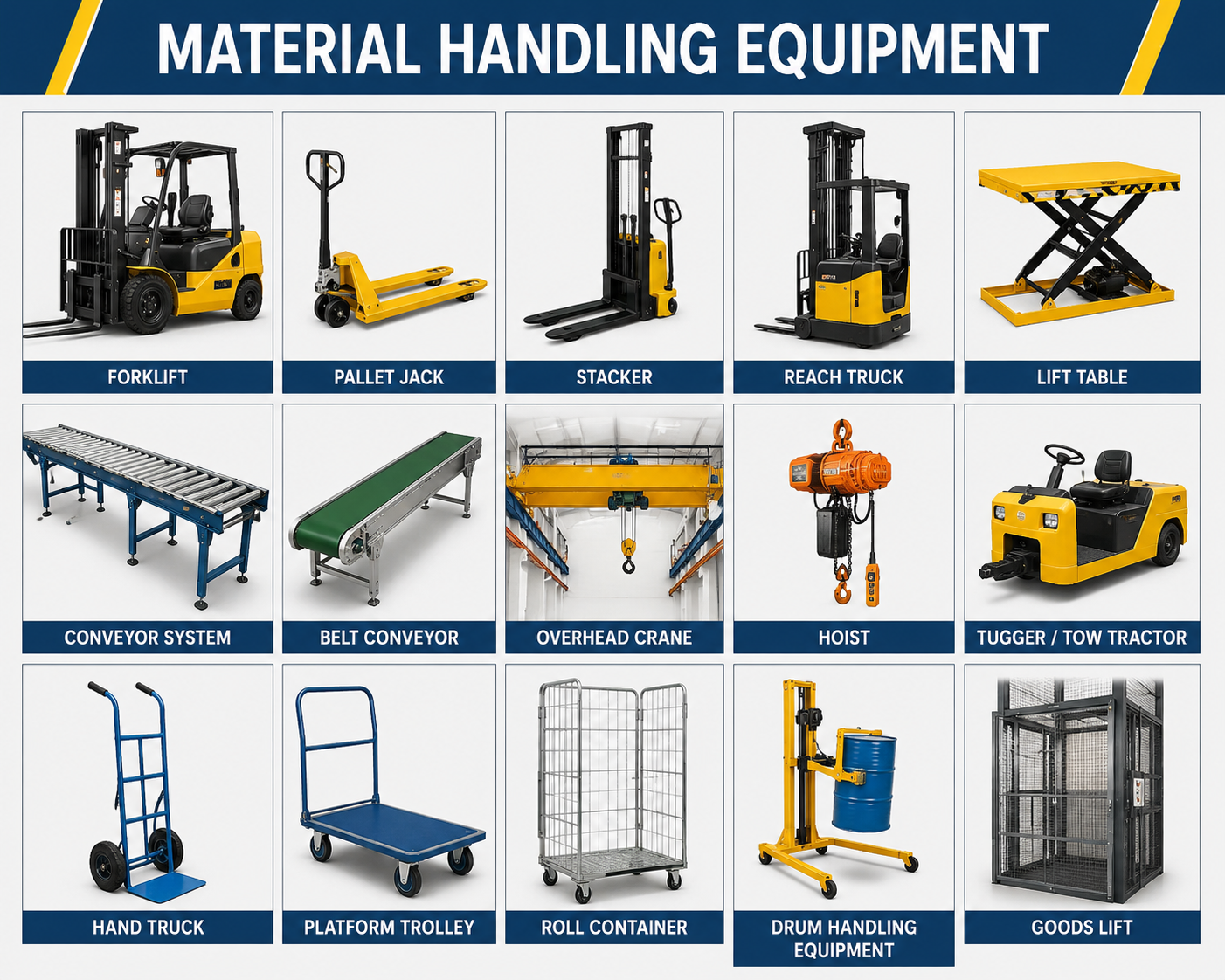
These Material Handling Equipment help in transporting heavy loads from one place to another to improve warehouse storage and reduce manual manpower. For many years, modern material handling solutions have helped industries streamline its operations along with minimizing downtime and operational costs. Due to its efficiency, industries are now heavily investing in advanced lifting systems, automated conveyors, hydraulic lifts, scissor lifts, goods lifts, freight lifts, and other warehouse handling equipment.

If you are searching for industrial lifting solutions, warehouse handling systems, hydraulic lifting equipment, or automated material handling systems, contact Josmech Equipments is a leading name amongst the Material Handling Equipment Manufacturers.


Introduction to Material Handling Equipment

Lets dive deep into material handling equipment(MHE) Guide, its functionality, types, applications and others. Material Handling Equipment is machines, devices, vehicles, storage systems, and automated solutions used for moving, storing, controlling, lifting, and protecting industrial materials and products while manufacturing, transporting, warehousing, and transportation processes.

These systems are really helpful in industrial productivity, optimize workflow, reduce labor-intensive tasks, and ensure safer material movement within factories and warehouses.

A lot of modern industries depend on efficient material handling solutions to support high production demands, regulate supply flow and smooth operations. From hydraulic goods lifts and scissor lifts to conveyor systems and electric forklifts, material handling systems have transformed industrial operations by improving speed, accuracy, and safety.

Types of Material Handling Equipments

There are several categories of material handling equipment designed for different industrial applications and operational requirements. Take a look at the types of Material Handling Equipment in India and Pune.

    1. Lifting Equipment

    Lifting equipment is used for the vertical movement of heavy materials and industrial goods. This includes:

  • Hydraulic Goods Lift Hydraulic goods lifts are widely used in warehouses, factories, and industrial facilities for transporting heavy goods between floors. These lifts operate using hydraulic power systems that provide smooth, safe, and efficient lifting operations.
  • Hydraulic Scissor Lift Hydraulic scissor lifts are elevated work platforms used for lifting workers and materials to higher working levels. These lifts are commonly used in maintenance, warehousing, and construction industries.
  • Industrial Stackers Industrial hydraulic stackers are used for lifting, stacking, and transporting pallets in warehouses and storage facilities.
  • Dock Levelers Dock levelers help bridge the height difference between loading docks and transport vehicles for efficient loading and unloading operations.
  • 2. Transport Equipment

    Transport equipment helps move materials from one location to another within industrial premises.

  • Conveyor Systems Industrial conveyor systems are automated transport systems used in manufacturing plants, packaging industries, and warehouses for continuous product movement.
  • Forklifts Forklifts are heavy-duty industrial vehicles used for lifting and transporting palletized goods across warehouses and manufacturing units.
  • Pallet Trucks Pallet trucks are compact warehouse handling equipments used for moving palletized materials over short distances.
  • Industrial Trolleys Industrial trolleys and platform carts help transport tools, products, and materials efficiently within factories and warehouses.
  • 3. Storage Equipment

    Storage systems help industries organize materials safely and optimize available warehouse space.

  • Industrial Storage Racks Heavy-duty storage racks maximize storage capacity and improve inventory management efficiency.
  • Warehouse Shelving Systems Shelving systems provide organized storage solutions for tools, products, and industrial materials.
  • Mezzanine Floor Systems Mezzanine floors create additional storage space within warehouses and industrial facilities.
  • 4. Positioning Equipment

    Positioning equipment helps place materials in proper working positions during industrial operations.

  • Lift Tables Lift tables are used to raise or lower heavy materials to ergonomic working heights.
  • Turntables Industrial turntables rotate products and materials during packaging and manufacturing processes.
  • Manipulators Industrial manipulators assist workers in handling heavy loads with improved precision and reduced physical effort.

Industries Where Material Handling Equipment is used?

Material handling equipment is essential for multiple industries that require efficient movement, storage, and transportation of goods. It has become the need of many Industries as it enhances the workflow and promotes business. Take a look at the broad industries that are actively relying on Material Handling Equipment in India.

  • Manufacturing Industry: Manufacturing plants use industrial material handling systems for transporting raw materials, machine components, and finished products.
  • Warehousing & Logistics: Warehouses and logistics centers use automated handling systems, conveyors, forklifts, and pallet trucks for inventory movement and order processing.
  • Construction Industry: Construction companies use hydraulic lifts, scissor lifts, cranes, and heavy-duty lifting equipment for handling construction materials and elevated work applications.
  • Pharmaceutical Industry: Pharmaceutical industries use hygienic and precision-based material handling systems for safe product transportation and storage.
  • Automotive Industry: Automobile manufacturing units use automated material handling equipment for assembly line operations and component transportation.
  • Food Processing Industry: Food manufacturing plants rely on conveyor systems and lifting equipment for hygienic material movement and packaging operations.
  • Retail & E-Commerce: E-commerce fulfillment centers use warehouse automation systems and handling equipment for faster order management and dispatch operations.

Exclusive Benefits of Material Handling Equipment

There are tons of benefits of using Material Handling Equipment in India. While we have already explored its diverse industrial uses, understanding these exclusive benefits will show you exactly how it transforms daily operational workflows.

  • Increased Productivity: Automated handling systems significantly improve workflow speed and industrial productivity.
  • Improved Workplace Safety: Proper handling systems reduce workplace injuries caused by manual material handling.
  • Better Space Utilization: Storage racks and warehouse handling systems optimize and maximize storage capacity.
  • Reduced Product Damage: Material handling systems protect products from accidental damage during movement and storage.
  • Lower Operational Costs: Efficient handling systems reduce labor costs, unexpected downtime, and material wastage.
  • Improved Inventory Management: Modern warehouse systems improve inventory organization, tracking, and operational accuracy.

How Material Handling Equipment Operates

There are different types of material handling systems and all of them have distinct operational efficiencies and specific functionalities. Understanding the working principles of material handling equipment helps industries choose the right machinery that perfectly suits their application.

  • Hydraulic Working Principle: Hydraulic systems use pressurized fluid to generate a strong lifting force. Hydraulic goods lifts and scissor lifts use hydraulic cylinders, pumps, and valves for smooth lifting operations.
  • Mechanical Working Principle: Mechanical handling equipment relies on a balanced system of gears, chains, pulleys, and levers to move and position materials.
  • Pneumatic Working Principle: Pneumatic systems utilize compressed air pressure to operate lightweight, rapid industrial handling equipment.
  • Electrical Working Principle: Electric material handling systems use advanced motors, precision sensors, and electrical controls for automated operations.
  • Automated Working Principle: Advanced automated material handling systems use PLCs, IoT sensors, robotics, and AI-based controls for intelligent warehouse operations.

Safety Guidelines for Material Handling Equipment

It is incredibly critical to understand key safety measures as these machines handle heavy loads and require attention at the time of operation. Here is a definitive list of safety guidelines everyone should keep in mind while or before operating lifting systems.

  • Operator Training: Operators should receive professional, certified training regarding equipment usage, safety procedures, and emergency operations.
  • Load Limitations: Equipment should never be overloaded beyond the manufacturer's specified load capacities.
  • Regular Inspection: Routine inspections help identify hydraulic leaks, worn-out components, and electrical faults before major failures occur.
  • Emergency Stop Systems: Industrial lifting equipment should always include functional emergency stop buttons and safety lock systems.
  • PPE Usage: Workers must wear proper personal protective equipment such as helmets, gloves, safety shoes, and reflective jackets.
  • Maintenance Schedules: Strictly following scheduled preventive maintenance ensures long-term equipment reliability and safe, predictable operations.

Maintenance Tips for Material Handling Equipment

It is strongly advised to keep your material handling systems running smoothly. Consistent regular maintenance directly improves overall equipment performance and extends its operational lifespan. Use this targeted checklist to maintain your systems:

  • Daily Inspection Checklist: Operators should briefly inspect controls, hydraulic systems, cables, wheels, and safety devices every day before starting operations.
  • Hydraulic Oil Checking: Hydraulic fluid levels and overall oil quality should be checked regularly to guarantee efficient performance.
  • Lubrication: Moving parts and high-friction mechanical joints should be lubricated frequently to minimize wear and tear.
  • Battery Maintenance: Electric material handling equipment requires routine battery inspection, cleaning, and proper charging maintenance.
  • Preventive Servicing: Investing in scheduled preventive maintenance significantly reduces unexpected machinery downtime and costly repairs.

Latest Trends in the Material Handling Industry

The material handling industry is evolving rapidly with the integration of smart automation and industrial software. To keep up with the pace of modern manufacturing, it is essential to stay updated on these latest operational trends.

  • Automation: Industries are rapidly adopting automated material handling systems to achieve faster, continuous, and more accurate operations.
  • Smart Warehouses: Modern warehouses use smart real-time inventory tracking, specialized sensors, and centralized warehouse management systems.
  • IoT-Enabled Lifts: IoT-based monitoring systems provide real-time equipment tracking data and predictive maintenance alerts before breakdowns happen.
  • Energy-Efficient Hydraulic Systems: Modern hydraulic systems are custom engineered for lower energy consumption and better overall eco-efficiency.
  • AI & Robotics: Artificial intelligence and autonomous robotics are actively transforming industrial automation and modern warehouse picking operations.
  • Electric Material Handling Equipment: Electric forklifts and battery-operated lifting systems are becoming dominant due to zero local emissions and lower operational costs.

Related Search:Material handling equipment list, Types of material handling equipment pdf, 4 types of material handling equipment, Material handling equipment list with pictures, Material handling equipment in logistics, Material handling equipment in operations management, Material handling equipment manufacturers, Material handling equipments in warehouse, Material Handling Equipment for Warehouse Efficiency, Material Handling Equipment (MHE) Guide, Materials Handling Equipment - Tutorial, MHE Material Handling Equipment, Material Handling Equipments And Tools, Material handling equipment pdf, Material handling equipment list, Material handling equipment near me, Material handling equipment company, Material handling equipment list with pictures,

Frequently Asked Questions (FAQs) | Material Handling Equipments

A goods lift is commonly used for vertical transportation of heavy goods between floors, while a scissor lift is used for elevated working access and maintenance applications.

Warehouse material handling systems improve inventory movement, reduce labor costs, optimize storage space, and increase operational efficiency.

Automated material handling systems use conveyors, robotics, sensors, and software controls to automate industrial material movement and warehouse operations.

Industrial material handling equipment should undergo routine inspection and preventive servicing as per manufacturer guidelines to ensure long-term safety and reliability.

Electric material handling systems are eco-friendly, make less noise, are energy-efficient, and require lower maintenance compared to diesel-powered equipment.

Factors such as load capacity, lifting height, workspace size, operational frequency, safety requirements, and industry application should be considered when selecting material handling equipment.